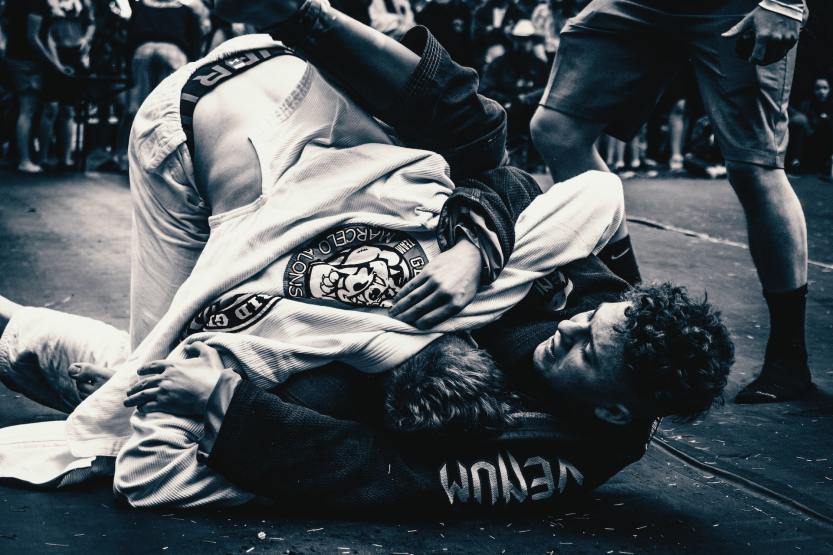
It’s important to know when to hold onto our grips and when to let go.
When I was a white belt-and sometimes even now as a blue belt-I’ll latch onto my partners with a death grip. I’ll hang to them even if there’s no advantage. Even if the opportunity to submit was long gone, I’ll still cling on. My knuckles would hurt due to the excessive force expended on them, but I would just consider it part of the jiu-jitsu game: no pain, no gain. But now, I’m learning to let go of the grips once they show signs of being fruitless.
It’s hard to let go of that grip that you’ve worked so hard to get. We’ve expended so much energy to get them and now we don’t want to lose them. But it’s crucial to know when to let go of grips that are not beneficial as our inability to leave them behind can lead us to our own demise.
The same concept applies in life. We hold to things way past their expiration date for a plethora of reasons: we’ve invested too much time, too much money, it’s a an old buddy that we don’t want to disappoint, it can be something familiar, and at times, it can be because they’re family. Whatever the reason is, it’s important to know when something is holding us back and is preventing us from growing, from reaching our potential. Learning to let go in life can be difficult because of the uncertainties that come with change. Many of us would rather stay in a familiar hell than take a chance at the unknown.
So how do you know when to hang and when to let go? There’s no magic criteria; there’s no hard set rule: we learn from experience. On the mat, learning from experience means tapping. Recognize that blindly attaching ourselves to our training partner for the sake of having grips is not beneficial. It’s important to be able to discern opportunities and threats.
Ask yourself: am I blindly attached to this grip? Is it serving any purpose? Or am I holding on just to hold on?
Know when to hold onto our grips and when to let go; the same applies in life.
 My Musha Shugyo - 私の武者修行